Showing posts with label Woman In Science. Show all posts

Thursday, December 21, 2017

Two reasons to watch the documentary “Mission Blue”


Translated by Lídia Paes Leme

Edited by Katyanne M. Shoemaker

In our first post in the Women's session “Old challenges for current women” we received a suggestion by Prof. Otto Muller P. Oliveira to post about the documentary “Mission Blue.” Indeed this documentary deserves a special mention in our blog because, aside from the excellent production, its content is simply inspiring.
The documentary “Mission Blue” was released in 2014 and tells the story of the incredible biologist Sylvia Alice Earle, explorer, author, mother, grandmother (amongst a thousand other possible titles) and her campaign to create a global coalition of marine protected areas, called “Hope Spots.”
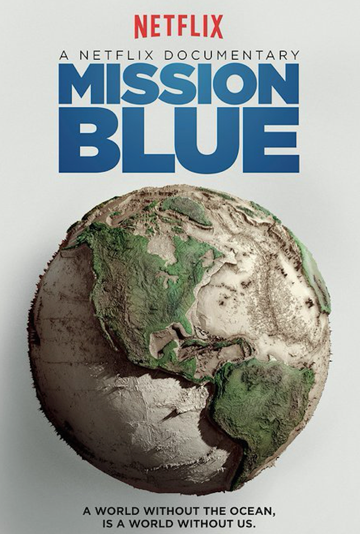


When watching the movie, it is impossible not to fall in love with and be inspired by two “characters.” The first is the organization itself, also called Mission Blue (www.mission-blue.org), which was created in response to the prize Sylvia Earle earned in 2009 at “TED PRIZE WISH” (watch the talk here). In that talk, Dr. Earle encourages the use of all possible media (movies, expeditions, internet, new submarines) in a campaign to inspire public awareness and support for a worldwide network of marine protected areas. If these “Hope Spots” are wide enough, it could be possible to save and restore the planet's blue heart! Today, Mission Blue is a coalition of over 100 groups, from multinational corporations to groups of scientists, concerned with matters of ocean conservation. Mission Blue's website brings an interesting but scary statistic: only 2% of the World’s ocean is protected, hence the importance of this kind of effort.
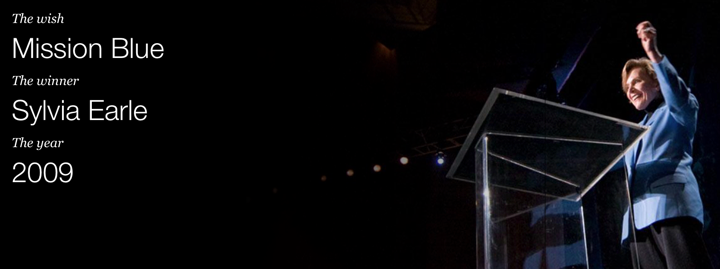

Font: https://www.ted.com/participate/ted-prize/prize-winning-wishes/mission-blue

The second reason to fall in love with this film is the main character, Sylvia Earle, a woman that turned 80 in August 2015, who actively keeps studying, exploring, diving, and defending the ocean (learn more
https://en.wikipedia.org/wiki/Sylvia_Earle). Sylvia completed high school at the age of 16, undergrad at 19 and her masters at 20. During her Doctorate, this rhythm slowed down, due to marriage and kids, but soon Sylvia returned to her frantic pace. In 1964, when her kids where only 2 and 4 she traveled for 6 weeks on an expedition in the Indian Ocean. According to Sylvia, she didn't know she'd be the only woman on board, for she was invited as the only botanist, not only woman. A reporter approached her in Mombassa, Kenya, from where the ship would depart, and Sylvia remembered being interested in talking about her work, but the reporter only wanted to know about what being on the ocean with so many men would be like. After all, the article was called “Sylvia sails away with 70 men, but she expects no problems.”
Despite everything appearing well, Sylvia implies in some interviews that her scientific expeditions may have lead to the end of her first marriage. This is a recurring difficulty faced in the scientific world; it is common to have campaigns where the scientists are away for weeks, sometimes months, without any communication with family. In 1966 Sylvia finished her Doctorate, and in 1968 she traveled 30m deep in the waters of the Bahamas in a submersible, 4 months pregnant with her 3rd child and in her second marriage.
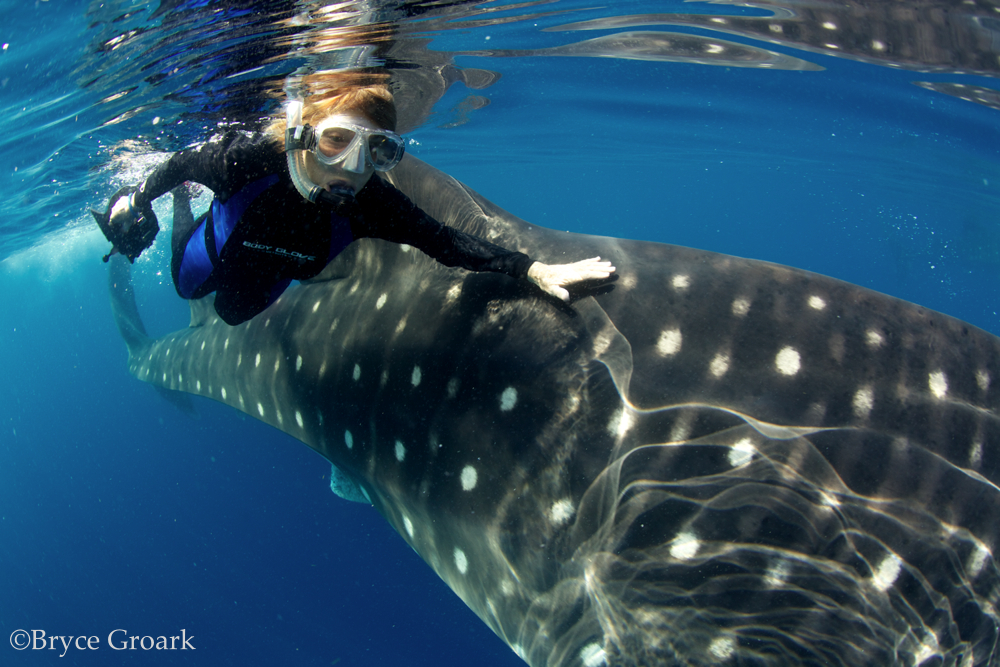
In 1969 she signed up to participate in the project Tektite, where scientists lived weeks in a laboratory placed under the sea, at 15m depth. Despite her 1000+ hours of diving experience and her excellent written proposal, she was not allowed to live together with men underwater in Tektike I. The following year however, she was invited to lead the Tektite II project, with a women-only team. The success of this team was an important milestone for women in research, and it set a precedent for future aquatic and space expeditions to include women in their teams.

Picture: Bates Littlehales.
Font: http://images.nationalgeographic.com/wpf/media-live/photos/000/450/cache/sylvia-earle-habitat-window_45011_600x450.jpg

After her experience as a mermaid, Sylvia became a popular face in the media and her career took off (we'd say, all other qualities aside, she also has a lovely face). In 1979 Sylvia walked on the ocean floor at depths never before touched by any other human. This was done using what is called a JIM SUIT, and was used at a depth of almost 400m. This adventure resulted in the book “Exploring the Deep Frontier.”

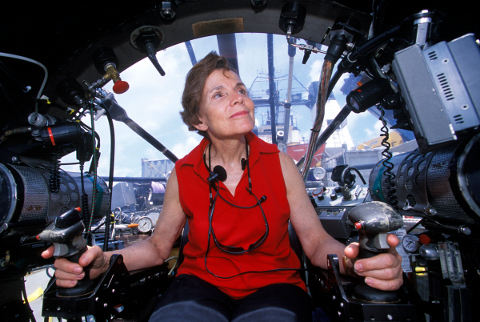
Image: Dr. Sylvia Earle in Deep Rover Submarine. Font: http://ww2.kqed.org/quest/wp-content/uploads/sites/39/2012/05/Sylvia-Earle-in-a-Deep-Rover_horiz.jpg

In the 80's, together with the engineer Graham Hawkes, she started a company to create submersible vehicles, like Deep Rover. This partnership ultimately led to her third marriage, one where the offspring were the submarines created by them. One of her daughters currently works with her in her company.


When asked if she had problems reconciling family and career, Sylvia says yes, many, and that she tried to rearrange her life, having a laboratory and a library at home. For women that dream about following a scientific career, Sylvia advises “Try, you'll never know how it would be if you don't try.”

Font: http://mission-blue.org/wp-content/uploads/2013/01/IMG_1065.jpg

Thursday, July 6, 2017

From Oceanographer to Programmer

By Letícia Portella

Original post here


   This week I was asked to tell a little about how I became programmer (or at least, I’m in the process). I wrote this text to tell a little bit more about my story.
   Let’s start from the beginning: I am oceanographer graduated from the Federal University of Santa Catarina (Brazil) in December 2013. Well, only that is usually enough to scare people. Oceanowhat?
   Oceanography is beautiful and exciting. I learned many interesting things and I fell in love with some disciplines that were frightening. To begin with, we studied calculus, physics, etc. When I started working in the area, I hesitated between geological and physical oceanography until 2011 when I entered an internship at a Navy Research Institute and, finely, I decided by Physical Oceanography, which is the area closest to the exact sciences.
   It is usual for oceanographers to work with matrices and arrays, thus it is very common to use a software called MATLAB. Therefore, during the college course I ended up learning a bit of MATLAB which is similar to a programming language with logic loops, conditionals, etc.
   However, when I joined the Navy, I met two oceanographers working with Python. Python? What is it? We had several discussions about how MATLAB was a paid software and at the university we were using a pirate version, which was not cool nor legal, right? Surfing this this wave, they started telling me about how Python would be the future of oceanography, thanks to its flexibility, ease application and, furthermore, it was free! Cool. Let’s learn, right?
   And so I had my first contact with a real programming language, so to say. My colleagues were very smart, you know why? Every day they challenged me to do something new. “I doubt you can read this txt”, “Now do this activity with the least possible amount of lines,” and so on. I thought it was fantastic! How they were creative! Later on I found out it was all online. OK!
   In the meantime I also had contact with Linux, remote access, Ubuntu, terminals, etc. A new world was opened to me, and it was very interesting!
   Coming back from internship, I fell into the real world: nobody was working with Python, nobody used Ubuntu / Linux and things can’t be changed. Okay, then, back to MATLAB. Things quite demotivating were that I had to learn by myself, become stuck with my doubts and, moreover, to learn something that people saw as useless (for our area).
   At the end of college I started working with a multinational which deals with port and coastal engineering. MATLAB and Windows full-time. But I’m stubborn; I started using Python wherever I could. Although away from further studies, I liked the language and wanted to continue learning (provided that I could do something useful). So I used Python to automate the production of maps in a software called ArcGIS. Afterwards I developed a software to calculate the size of a ship based on international tables and I even entered a brief adventure in the Web with Django.
   All of a sudden, I decided to enroll myself in a master degree course and I decided that all pre and post processing data would be made with Python. Also I chose a numerical model that could only be used in Linux environment. This time I actually challenged myself. Thus, I decided to get out of laziness and start learning! Even if I would have to do it by myself (But it was not so!). A very close friend helped me a lot and so I’ve been learning more and enjoying it more and more.
   Floripa Python group was formed by this time. I asked a friend to go with me in the first meeting because I was afraid and ashamed of not knowing enough. But he canceled at the last minute! I didn’t give up and attended the meeting anyway. I was the only girl in that first meeting, and as things can get worse, the discussions were exclusively about web. I did not understand anything, but I thought that was a fantastic world.
   I decided not to go to the next meetings since I was scared by the contents and because I did not understand anything. But then, the “magic” of the Python community happened. The boys noticed my problem and called a person to give a speech that was more “like me” (less web and more data analysis). When the lecture was going to happen, many of them sent me warning messages saying that I should go. Fabulous, right? After that, I engaged myself and actually started to get involved with the organization of SciPy Latin America 2016, Python Brazil 12 and mainly with Pyladies. In addition, Anitas (a group to empower women in technology and entrepreneurship) was being structured and I met some wonderful and inspiring women. Finally, in 6 months everything changed and I had completely changed my life

   And so I realized that I liked that. Very much. I loved programming Github, Python, Ubuntu, etc. I could spend hours studying it. As I got involved, I realized it could be a second option. However I did what most of us do: I thought I would never get into it. “I’m not good enough”, “I could never get fully involved in this,” etc. I really thought that. We know we usually think little of ourselves. But even thinking that way, I did not stop trying to learn and getting involved. That was not my goal! Then, suddenly I decided to show to that web folks what an oceanographer was doing attending to those meetings. After all, I programmed? Why? So I presented some of my master degree’s results, what kind of data I was working with, and a little video with a tidal wave being propagated which I achieved with my numerical model.
   On the same day, the project manager of a company told me that there was a vacancy for a backend position in Python at the company. At the end of the evening I found myself next to her and decided to learn more about the job she had mentioned and we started talking. In the end I said: “very nice, but unfortunately I cannot apply for this job.” She asked me why and I said — I know Python, but this work is in a completely different area. And then I got an answer I did not expect to hear: “No problem, what you do is as complex as we do, come talk to us in another moment!”
   And I did so. Thus, in three weeks my life was changed, I quitted my job to become a backend developer, where I am now entering my third week.
   When I told people that I was changing area, I was expecting to hear “you’re crazy!” But that was not what happened … I got a lot of support and encouragement, especially from the nearest people who endured my insecurities throughout the process from the first conversation until my first day at the new job.
   I will not lie. The night before my first day I panic. I cried a lot. What was I doing? I wouldn’t make it! It was crazy! What I had was not rational, it was purely emotional and out of control. I called who I knew would calm me down and I just threw myself into the next day, with a huge fear and a strong desire to make it work.
   So I would like to say a few things I learned in the process …
   The first thing I learned is that I did not make this change without fear and uncertainty. Those feelings can’t stop us of doing things ever! I received several comments saying that my courage was inspiring and I was an example. I do not consider myself as an example of anything! You can’t imagine how scared I was! But then I realized that people that are examples to us also are afraid and that’s no problem. Do it with fear, but do it anyway!
   The second thing is: do things with passion. Find out what you like and do it! Apart of having further prospects, even if you think you do not know and you won’t get there. The most important is to love something.
   And last but not least: surround yourself with and make sure you appreciate people who support you. I would never have achieved so much or would have courage to change my life if I wouldn’t count on the support of numberless angels, as from the first ones who challenged me to the present ones who support and continue supporting me.
   This is a place where I decided to share my story and try to help girls who want to learn programming. Come in, make yourself comfortable and I hope you fall in love as much as I do.


Letícia Portella. Oceanographer, passionate developer and addicted reader

Thursday, December 1, 2016

A foreigner researching in Brazil

By Sabine Schultes

While writing this post, I'm at my work desk in the Munich Biology Faculty. From the window, I see green fields; the only salt water in a 600km (~370 mi) radius is a mere 20L (~5 gal) of artificial seawater in the laboratory, in a bucket containing copepods of the species Acartia tonsa. That's what is connecting me with my great passion, the study of biological oceanography.

Copepods are minuscule crustaceans, around 1 millimeter (~0.04 in) in length. With the naked eye, they look like jumping little dust particles in water. They live in all water ecosystems including lakes, rivers, underground water, and oceans. Their numbers seemingly rival the stars in the universe, and as they are so numerous, they have an important role in ocean ecology. They consume the biomass created by microalgae through sun energy – in a process called primary production – and transfer it to fish, as fish like to eat copepods. (Learn more about it here)

Copepods

I have worked with copepods from the temperate waters of the North Atlantic, from the cold Antarctic ocean, and in 2007 I went to work as a post-doctoral researcher in the Oceanographic Institute of USP (University of São Paulo) to get to know the tropical copepods. What a joy! …and, at the same time, what an adventure to live in São Paulo, in a country 12000 km away from Germany. I jumped in without thinking twice and, when in a taxi at “Marginal Tietê,” between Guarulhos and the University City, I suddenly realized that I was far away from home. It is in these transitional moments, moving from one world to another, that all details are fixed in our memories. I was warmly welcomed by the “Paulistanos” (those who live in São Paulo) and, although Brazil is known for its beaches, samba and caipirinha, I had the opportunity to work with high-end technology in my research field.

I was in charge of two sophisticated instruments for my copepod analysis. My job was to establish measurements and calibration protocols. There was no bias or concern that “a woman does not understand technology.” Every day my learning experience was huge: living in a big city in a tropical country, Portuguese, image analysis techniques, electronic data exchange. Also huge was the help I received from science colleagues from Brazil, Canada and France. In only a short while, it was possible to christen the equipment in the Oceanography base at Ubatuba. For a marine science researcher, that was a dream coming true.

The famous LOPC is a particle profiler, that can detect, count and measure plankton with high spatial resolution. By Catarina Marcolin.

Another dream was coming true with the expedition of the project PROABROLHOS: to study with said equipment the zooplanktonic (copepods and other tiny animals) distribution on the Abrolhos Bank. There's a bunch of fish there, and remember that fish like to eat copepods! In this project, researchers from various universities of Brazil and the world joined forces in order to enhance the understanding on how this ecosystem operates, in order to protect the great biodiversity of Abrolhos and it's value to society (http://laps.io.usp.br/index.php/90-portugues/laps/projetos/155-proabrolhos).


To spend one month on board of the old oceanographic ship Prof. Besnard was quite the adventure (it has finally been retired – now the oceanographic institute has a new ship), but all worked out. Our results were published in the following years (2009 to 2013), but I decided to go back to Europe before that. How come?! Wasn't that a dream come true??


Yeah, well, looking back, I can sense I lacked some faith. But also, maybe I needed to be around my own people, culture, and family to get the faith to keep on studying the oceans of the world. Unfortunately, life in science is filled with uncertainties and short work contracts (1 year). At the same time, scientific realizations take years. To write a project, get funding, execute it, analyze the results, and communicate that new knowledge all happens in 5-10 years’ time.


Back from Brazil, it took me another 4 years of coming and going between France, Brazil (I fell in love), and Germany for me to finally get a position as a teacher in the Faculty of Biology of Munich in 2012, when I was 40. I live near my parents' house, and I am teaching zoology, ecology, and scientific initiation to undergrad and grad students. For the first time, I know where I will work, live, and study the ocean, until at least 2020, when the future may take me down another path.


I had few preconceived ideas before coming to Brazil. I like living in other countries. I usually try, at first, to observe and go with the flow. I discovered the “Brazilian way” of doing things, the São Paulo coldness, and I learned how to dance forró. I thought – still do – that all of the people around me were very dedicated to work, friends and family. The most important thing I learned in Brazil? That sometimes things may take a while, but all works out in the end!

In Rio Grande, RS, Brazil


About Sabine:

Sabine Schultes likes to see herself as biologist and oceanographer. She studied biology and hydrobiology in the Hamburg faculty, defended her masters in oceanography at the Université du Québec Rimouski, Canada and her doctorate at Alfred-Wegener-Institut, Bremerhaven. After some post-doctoral contracts in France and Brazil, she is now a teacher at the Munich Faculty (LMU), teaching zoology and ecology. She says that her parents taught her how to look for new paths and to socialize with people and cultures around the world. She is convinced that today, more than ever, we need to take care of our oceans.  

Sabine has also published:
http://chatwithneptune.blogspot.com.br/2016/09/sun-protection-cosmetics-good-for-you.html