Showing posts with label Joana Ho. Show all posts

Wednesday, May 9, 2018

Ocean research is the key to a sustainable future


Illustration by: Joana Ho


Did you know that the UN declared next decade (2021-2030) as the decade of ocean science?

The ocean covers 71% of the Earth's surface. It helps to regulate the climate and provides a number of essential and, in some cases, untouchable resources for man. The ocean is a source of food, raw materials, energy, and transportation, in addition to being used for recreation and leisure.

Currently, more than 40% of the global population lives in regions within 200 km of the sea. In addition, 12 out of 15 megalopolises are coastal.

However, rapid industrial development and population growth have deeply impacted the oceans. Climate change, unsustainable exploitation of natural resources, pollution, and habitat degradation threaten the productivity and health of our waters.

Storms, proliferation of toxic algae, and coastal erosion are just a few of the consequences of this, which are devastating to communities living in coastal regions. Throughout human evolution, we have devised strategies to increase our resilience to such sea damage. But for how long will that be enough?

In 2015, the southwest coast of Brazil recorded winds of 106 km/h – a light hurricane typically has speeds of about 115km/h – so it was almost there. From these winds, the area suffered much damage including fallen trees and billboards as well as the destruction of some buildings.

In 2017, a windstorm left 38,000 homes without electricity and knocked down more trees and commercial signs. In the Port of Santos (SP), the largest in Latin America, a man was trapped in a crane.

This all happened because the sea water was warmer than normal, generating areas of low pressure and creating instabilities that allowed for the development of these strong winds.

And that's not all. Let's think about food:

Research shows that more than 50% of the fish species consumed for food in the world are being exploited above the sustainable limit. According to a 2006 study, led by Boris Worm of the University of Halifax in Canada, fish and seafood stocks are expected to collapse by 2048 if nothing is done to contain the loss of marine biodiversity.

Brazilian sardines (Sardinella brasiliensis), for example, are widespread throughout Brazilian cuisine. It is an extremely important species for the Southern and Southeastern regions of Brazil. Rich in various nutrients, it has always been considered a low-cost and nutritious food.

However, due to overfishing, its price has been rising over the years. Sardine stocks have already collapsed twice, once in 1990 and again in 2000. In addition, sardines are a species that suffers directly from the influence of environmental variation. By 2016, the amount of fished sardines was once again reduced to frightening levels. Some experts even characterized the episode as yet another collapse of the species.

This shortage was caused by abnormal water warming, a process that is associated with both the El Niño phenomenon, which occurred that year, and global climate change. It is worth mentioning that the region is also under political instability, with constant government turnovers and a reduction in ocean investments, which does not help the scenario at all.

Now imagine if phenomena like El Niño became more frequent and more intense with climate change? How long will the species last?

We need to find new ways to use natural resources and use them conscientiously. However, according to estimates by the UNESCO Intergovernmental Oceanographic Commission (IOC), the average national expenditure on oceanographic surveys varies from 0.04 to 4% of the total invested in research and development. This tiny budget is too little to achieve high-quality studies that involve long-term processes. Oceanographic research is quite expensive, because it requires ships, on-board laboratories, equipment, qualified personnel, et cetera.

But there is still time to reverse this situation.

Scientists and activists have gradually organized a social movement that led the United Nations, at its General Assembly in December 2017, to declare the next decade as the Decade of Ocean Science for Sustainable Development.

The initiative aims to encourage further action for a more integrated and sustainable ocean observing system, in order to facilitate making new discoveries by monitoring the coast and deeper waters, thus broadening research to promote ocean conservation and natural resource management. Activities for this period will be the responsibility of UNESCO's Intergovernmental Oceanographic Commission (IOC).

The process was long and hard fought. The 2012 Rio + 20 final document named "The Future We Want" made extensive references to the ocean. In 2013, the Global Ocean Commission was created, and in 2016, released its report about ocean degradation and the need for more effective policies to help restore the health and productivity of these waters. The 2030 agenda for sustainable development, launched by the UN in 2016, also highlighted the oceans as protagonists for conservation actions.

This UN statement is a glimmer of hope for a more sustainable future, but it calls for greater engagement of researchers, politicians, government, and the general public. More research, incentives, and respect are essential if we seek to advance our knowledge about the waters around us; we must make better use of available resources to ensure their existence for future generations.

It is vital to find solutions that allow us to understand the changes that are taking place and to reverse the damage before it is too late.

The UN initiative aims to transform the way global society views and uses the ocean. As suggested by goal 14 of the Sustainable Development Goals (SDG), it will coordinate its actions to foster the conservation and sustainable use of the ocean, seas, and marine resources.

Before progress can be made, it is essential to understand the lack of knowledge that we still have when it comes to the blue immensity:
  • There is no internationally accepted methodology for estimating the economic value of services provided by the ocean to the human race
  • Science is not yet able to assess the cumulative impacts of climate change, marine pollution, or anthropogenic activities on ocean health
  • Only 5% of the ocean floor has thus far been mapped
  • Over 250 million km2 of the ocean floor is in complete darkness, yet it shelters possibly millions of still unknown species
  • Only 3 people have ever explored the deepest point of the ocean

The next decade will be our time to support, demand, and celebrate new achievements for the health of our ocean, so that we can make the services and resources of the ocean available to future generations.


References

Global Ocean Commission. The Future of Our Ocean: Next steps and priorities Report. Available at http://www.some.ox.ac.uk/research/global-ocean-commission (Global Ocean Commission, 2016).
Ministry of the Environment. Management Plan for the sustainable use of Sardines-Verdadeira in Brazil. Source:Ibama:


UNESCO. United Nations Decade of Ocean Science for Sustainable Development (2021-2030) UNESCO press release. Available at: https://en.unesco.org/ocean-decade (2017).


United Nations General Assembly. The future we want. Rio+20 conference outcome document A/RES/66/288. Available at:

Wednesday, October 11, 2017

Ugly animals need love too!

Written by: Jana M. del Favero


Illustration by: Joana Ho

   What do a dolphin, a sea turtle, and panda bear have in common? They are considered flag species, meaning they are charismatic species that can draw public attention to a conservationist cause. This concept emerged in the 1980s as a way to ensure conservation of biodiversity. Since it is not possible to finance protection projects for all species of an area, we raise the status of a charismatic species as a means of supporting its overall ecosystem. When I was an intern for the Tamar Project, I was used to receive tourists at the Ubatuba base to talk about sea turtles. While teaching them about sea turtles, I ended up also teaching them about the fish that they consumed and the damages garbage and automobile use in spawning areas caused, etc. The main message always went through several other messages. Whenever we talk about the importance of preserving the flag species, we also talk about the importance of preserving the entire ecosystem.

   Although it is an efficient concept (who does not think about the Panda Bear when thinking about WWF?), its application requires caution. By prioritizing flag species, you run the risk of not preserving those who really need to be preserved. It is important to remember that several species are threatened with extinction. Some scientists even argue that we are going through the sixth major extinction of the Earth (episodes in which large numbers of species go extinct in a short period of time).

    According to scientists all prior mass extinctions were caused by natural catastrophes, such as the fall of a meteorite. However, WE (human beings) are causing the sixth extinction! Paradoxically, although WE are causing the sixth extinction, WE are also the ones that can prevent it from being more tragic.

   So, it was in thinking about the protection of a group of endangered and "disadvantaged" animals that the biologist Simon Watt created the “Ugly Animal Preservation Society.” No, that is not a type, this idea was quite contrary to the use of traditional flag species. According to the creator, it is not fair that the panda gets all of the attention.

   The innovative idea of Simon Watt did not stop with the creation of the society. To raise funds and save aesthetically unprivileged species, he and a group of artists ventured into the United Kingdom, performing shows and stand up comedy, in which each artist featured an ugly animal. At the end of each evening, people could vote on what should be the mascot of society.

 Among some strong competition of the weirdest frogs, salamanders, snails and insects, the winning mascot was a fish, the Blobfish. Besides being ugly, this fish, scientifically called Psychrolutes marcidus, inhabits the deep waters (between 600 and 1200 meters deep) of South Australia, including Tasmania. They have no swim bladder, only the minimum number of bones needed for survival, and their body has a gelatinous consistency. But these characteristics all contribute to being able to live in their high-pressure environment, with the water around them as their main structural support.

   But I confess that I found the vote somewhat unfair. Knowing that every 10 meters that we dive to find the Blobfish, the pressure increases by 1 atm. We would meet the ugly creature in an environment with more than 60 atm of pressure pushing down on us, and our organs would crush and we would probably look like paste (actually we would have died long before!). Meanwhile the Blobfish would look like an "ordinary" fish and not the gelatinous creature we thought so ugly while we analyzed it on the Earth’s surface, at only 1 atm.

Cover of the book written by Simon Watt with an image of the mascot of the "Society of Preservation of Ugly Animals," the Blobfish.

   Another marine fish that competed as the ugliest animal was the European eel (scientific name: Anguilla anguilla). Although it is critically endangered and it looks more like a snake than a fish, I believe that this species should not even be in this competition because they are wonderful! The European eel is a euryhaline fish, which withstands great variation of salinity, and is catdromic, meaning it grows in rivers and spawns at sea. In addition, it has leptocephalus larvae, which look beautiful, last about 3 years, and reach up to 8 cm in length!

European eel: adult (left) and larva (right)


   So, have I been able to convince you that the European eel and the Blobfish are not ugly, but that they do need our attention and protection?

   In your opinion, which endangered animal is ugly and should be preserved?

About the “Ugly Animal Preservation Society” (Come in and laugh a lot watching the videos): http://uglyanimalsoc.com

Thursday, August 10, 2017

Seagrass: canaries of the sea

By Juliana Imenis, Juliana Nascimento, Larissa de Araujo, Natalia Pirani, Otto Muller and Paula Keshia


In the early 20th century, coal miners frequently carried caged canaries to work. The little birds saved many miners' lives because their sudden death or sickness indicated a possible gas leak. An alarm would sound and the mine would be evacuated.
We could say the canaries were bioindicators, or organisms that indicate a possible environmental problem through their behavior or health status. Today, we no longer have a need to sacrifice the canaries because we have electronic indicators that can tell us about possible mine disasters.


Like the canary, some organisms are extremely sensitive to pollution and habitat alterations; their populations tend to diminish or even vanish quickly after environmental modifications take place. Other organisms may be very tolerant to poor environmental conditions and can sometimes have a population boom in areas where the conditions would be inadequate to the majority of other species. One of these bioindicators is the marine phanerogam, also known as marine seagrass.


Image by Joana Ho

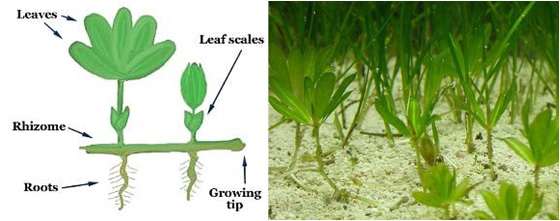
This particular group of plants grow on the sea floor, have elongated straight leaves, and subterraneous stalks, called rhizomes. Seagrass may live completely immersed in water, and they are found in coastal waters of nearly every continent. Despite being known as “seagrass”, this group is closer to the lily and ginger families than grass (Figure 1). They are an important part of the diet of manatees and sea turtles, and they are used as habitat by many other sea animals (Figure 2), including commercially important fish and crustaceans. Although difficult to quantify, seagrasses have a large aggregated commercial value, estimated to be up to 2 million dollars a year. They also play an important role in sequestering carbon into their biomass and sediment, thus decreasing the carbon dioxide (CO2) concentrations in the atmosphere. This helps promote nutrient recycling, coastal protection, and improve overall water quality.

Figure 1 – Morphology and occurrence in the natural environment of genera Halophila. Despite being known as “seagrass,” this group is closer to the lily and ginger families than grass. Adapted from Sarah Lardizabal schematics. http://www.reefkeeping.com/issues/2006-04/sl/


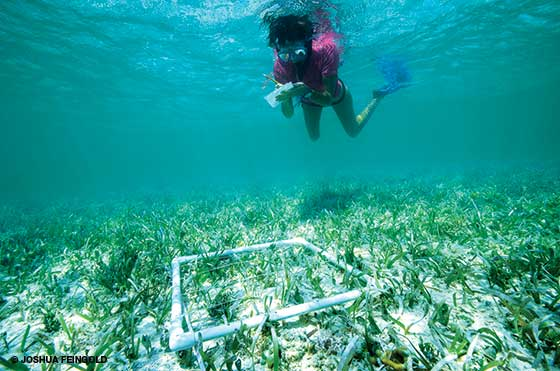
Figure 2 – Many animals visit the seagrass fields searching for food. http://portuguese.alertdiver.com/Manguezais-e-Angiospermas-Marinhas


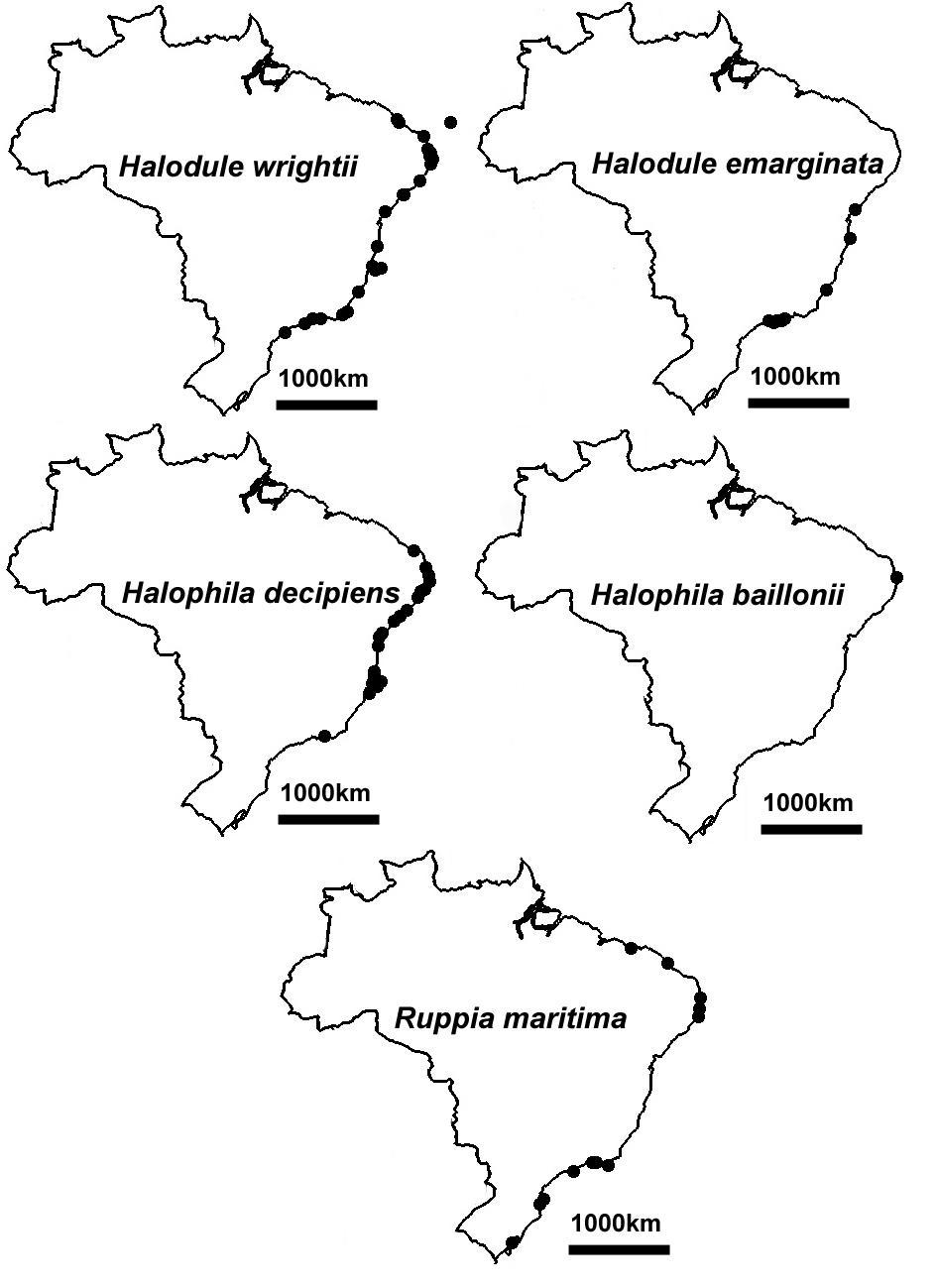
In Brazil, despite controversial information and the necessity of more genetic studies to differentiate the species correctly, there are so far, five known species of seagrass (Figure 3): Halodule wrightii Ascherson; Halodule emarginata Hartog; Halophila baillonii Ascherson; Halophila decipiens Ostenfeld and Rupia maritima Linnaeus. Seagrass are considered to be great environmental quality indicators, because they are very sensitive to light and nutrient availability variations.


Global climate change has many impacts on the marine environment, including the rise of global average sea surface temperatures, variations in pH (ocean acidification), and alterations of ocean currents. These are some of the rapid changes in marine environment that have been seen by researchers, and their consequences are still little known. There are many factors involved in the interactions between environmental variables and biological communities, making overall consequences hard to forecast (Figure 4).

Figura 2.jpg
Figure 3 – Identification of seagrass species can be controversial, but nowadays it is defined that there are five species along the Brazilian coast. Marques & Creed 2008.

Figure 4 – Many studies have been developed in this rich environment, but more research is needed if their importance and probable environmental changes are to be considered. http://portuguese.alertdiver.com/Manguezais-e-Angiospermas-Marinhas

Seagrass need specific environmental conditions, like low turbidity and high incidence of light. They are suffering local reduction and in some places completely vanishing, indicating that the anthropegenic environmental changes are happening fast, not giving the organisms enough time to respond to the new conditions. The capacity of ecosystems to respond to impact and return/maintain their original conditions is called resilience.


Although the degree and type of impact on seagrass may vary with geography, some hypothesis were generated by the Benthic Habitat Monitoring Network (ReBentos) about how climate change may affect them: (1) the increased concentration of nutrients, given the increased quantity of rain, may cause changes in the community composition, favoring the occurrence of opportunistic species, which can be damaging for the local species; (2) changes in sea surface temperature can affect tropical species, favoring the extension and displacement of their occurrence limits towards higher latitudes; (3) extreme events, like floods and storms, may cause reduction or disappearance of seagrass in a quick and abrupt way; (4) the increased quantity of continental matter in estuaries may affect the abundance and composition of the communities, due to the increased turbidity and salinity changes. On the other hand, the reduction of rain and/or increased penetration of seawater into continental waters could increase or alter the estuarine seagrass' area of occupation; and finally (5) days or week-long heat waves, derived from external events, may reduce or extinguish fields in shallow areas.


As an example of evidences that support these hypothesis, we can mention a study published by the Journal of Experimental Marine Biology and Ecology by Ricardo Coutinho and Ulrich Seeliger, that, in 1984, observed that the species R. maritima, although tolerant with eutrophicated conditions, was shadowed by epiphytes and macroalgae that grew due to an excess of nutrients in the water. Those organisms tangle in this seagrass species, causing reduction on its photosynthetic rates and increasing their drag, facilitating their detachment when subjected to waves and currents. Another example is the study published in the Marine Ecology by Frederick T. Short and collaborators, that in 2006 observed the reduction of H. hrightii through the movement of sediment, caused by stronger and more frequent storms, which buried the fields of seagrass.


Therefore, as mentioned by other authors, we can consider seagrass as the canaries of the sea, important in diagnosing the environment's health in response to global climate change. Certainly, the loss of these ecosystems will bring not only economic loss, but also the loss of biodiversity, a factor that is much more valuable and difficult to measure.


To know more:


COPERTINO, M.S.; CREED, J.C.; MAGALHÃES, K.M.; BARROS, K.V.S.; LANARI, M.O.; ARÉVALO, P.R.; HORTA, P.A. (2015). Monitoramento dos fundos vegetados submersos (pradarias submersas). IN: TURRA, A.; DENADAI, M. R.. Protocolos de campo para o monitoramento de habitats bentônicos costeiros - ReBentos, cap. 2, p. 17-47. São Paulo: Instituto Oceanográfico da Universidade de São Paulo. Disponível em: <http://www.producao.usp.br/handle/BDPI/48874>. Acesso em: 04 nov. 2015.


MARQUES, L. V.; CREED, J. C.(2008). Biologia e ecologia das fanerógamas marinhas do Brasil. Oecologia Brasiliensis, v. 12, n. 2, p. 315 - 331.


MCKENZIE, L.(2008). Seagrass Educators Handbook. Cairns: Seagrass Watch-HQ. Disponível em: <http://www.seagrasswatch.org/Info_centre/education/Seagrass_Educators_Handbook.pdf>. Acesso em: 30 out. 2015.

MCKENZIE, L (2009). Coastal Canaries. Seagrass Watch, v.39, p. 2-4. Disponível em: <http://www.seagrasswatch.org/seagrass.html>. Acesso em: 03 nov. 2015.


Juliana Imenis Barradas, CCNH-UFABC, PhD student in the postgraduate program in Evolution and Diversity, biologist, Master in Zoology (UFPB). juliana.imenis@ufabc.edu.br, http://lattes.cnpq.br/4843331968538355


Larissa de Araujo Kawabe, CCNH-UFABC, master graduate student of in the postgraduate program in Evolution and Diversity, biologist. http://lattes.cnpq.br/7133427266626274


Juliana Nascimento Silva, CECS-UFABC, undergrad in Environmental and Urban Engineering (UFABC) http://lattes.cnpq.br/5975285955317582


Paula Keshia Rosa Silva, CCNH-UFABC, mestranda em Evolução e Diversidade (UFABC), http://lattes.cnpq.br/9557245804556650


Natalia Pirani Ghilardi-Lopes, CCNH-UFABC, professora adjunta, bióloga, doutora em Botânica (USP), http://lattes.cnpq.br/8457066927181345


Otto Müller Patrão de Oliveira, CCNH-UFABC, professor adjunto, biólogo, doutor em Zoologia (USP), http://lattes.cnpq.br/7304237172635774


Thursday, March 16, 2017

Honey, I’m pregnant!


Image (right): Flickr

Today we are going to talk about the Super Dad of the animal kingdom, the seahorse! This peculiar organism is considered a Super Dad for a good reason: the males become pregnant! That's it! Seahorses stand out in the animal kingdom because the males are responsible for all parental care after fertilization: they carry the pups during gestation, experience the "birth pangs," and finally give birth! Recent research also shows that seahorse daddies have even more similarities to human mommies than we thought! But before we talk about those peculiarities, let's get to know a little bit about seahorses in general.

Two "pregnant" seahorses.
Image: Flickr

Seahorses are bony fishes (teleosts) belonging to the genus Hippocampus and the syngnathidae family (Syngnathidae). This family has the unique developmental characteristic of viviparity, where embryonic development occurs within the body (the same as humans), which in this case, is the paternal body. There are more than 50 species of seahorses distributed throughout the world in tropical and temperate regions. Of these, three species occur on the Brazilian coast: Hippocampus reidi, Hippocampus erectus, and Hippocampus patagonicus, present in the marine and estuarine environment.

Representatives of the three species of seahorses that occur in Brazil: Hippocampus reidi, Hippocampus erectus, and Hippocampus patagonicus, respectively.
Images:  Projeto Hippocampus

These fish move vertically through wave movements of their dorsal fins, which vibrate rapidly. This type of vertical locomotion slows them down to the point of being considered one of the slowest fish in the oceans. Seahorses are predators, with a diet based on plankton, crustaceans, and small animals that are sucked through their tubular snout. They are also skillful at camouflaging themselves: if they feel threatened, they can change color and develop skin projections that mimic algae or coral polyps. Additionally, they can become rigid and immobile, fixing themselves on algae and corals through their prehensile tail. But these disguises are not infallible: crabs, some carnivorous fish (e.g. tuna), penguins, sea birds, and even humans predate upon adult seahorses (to learn more about plankton, read our post O que você sabe sobre o plâncton?).

Seahorses mimic the environment when they feel threatened.
Images: Flickr

Most seahorses are monogamous, so that both the male and the female of a formed pair repel other partners who try to interfere with the relationship. For mating, they perform a type of dance in which they synchronize their movements, turning around one another with interlaced tails. Male pregnancy has interesting implications for the classic sex roles in mating. In most species, males compete for access to females, so it is common to see the evolution of secondary sex characteristics * in males. According to researcher Adam Jones of the University of Texas, in the case of seahorses, females exhibit a competitive behavior that is typically characteristic of males. In addition, males appear "demanding" in relation to the choice of their partners, an attribute commonly observed in females.

Illustration: Joana Ho

Now let's get down to business: how can males in this group get pregnant? The male seahorse has a specialized brood pouch where the female places her oocytes (reproductive cells). When it is ready to mate, the male signals the female by filling the pouch with water. The female, in turn, swims and presses against it, placing her ovipositor into a dilated hole in the male's pouch. After the oocytes are transferred, the hole closes, and the male fertilizes them. Thus begins the development of the babies (called fry) inside the body of the male.

The gestation period of this group varies greatly, according to the species and the water temperature, and can occur between ten days to six weeks. In tropical regions, seahorses have a gestation period of around 12 days. They reproduce throughout the year, and from the first year of life, a couple is able to produce more than 1000 larvae per gestation.

Seahorse giving birth.

The challenges of pregnancy are the same for all animals, including ensuring the adequate supply of oxygen and nutrients to the embryos. Recent studies have shown that several animal taxa have overcome these challenges in a similar way. Seahorse embryos, like many other viviparous animals, acquire many nutrients from the vitellus of the mother’s egg, which is equivalent to the egg yolks of chickens. Researcher Dr. Camilla Whittington and colleagues at the School of Biological Sciences, University of Sydney, Australia, have shown in studies published in Molecular Biology and Evolution that additional nutrients, such as calcium and some lipids, are secreted by the fathers from the brood pouch and absorbed by the embryos. In addition, the dad’s pouch also maintains the complex challenges of gas exchange, excreta removal, and providing immunological protection to the young!

Pregnancy is accompanied by many morphophysiological adaptations, such as the remodeling of the brood pouch, transport of nutrients and residues, gas exchange, osmoregulation, and immunological protection of embryos. Another curiosity discovered by researchers is that the genetics related to these adaptations are very similar to the genetic expression of the internal reproduction of mammals, reptiles, and other fish. It is surprising that, even in animals with very distant evolutionary histories, the genetic tools for reproduction have developed remarkably similar to each other, even between viviparous aplacental (seahorses) and placental (mammalian) animals (Caspermeyer, 2015; Whittington et al., 2015).

Seahorse populations are declining worldwide. In addition to their limited locomotion capacity, the destruction of their habitat and incidental and targeted fisheries have threatened the lives of these fish. There is high demand for live specimens among ornamental fish enthusiests. Dehydrated, they are used as ingredients of homemade and industrialized drugs and as decoration, which leaves them even more vulnerable. The purchase of these fish, even alive, encourages their capture and trade, in addition to contributing to the ecological imbalance. Genetic, physiological, and ecological studies of these animals help not only to understand their biology and the evolutionary steps that led to the inversion in sexual behavior, but also contribute knowledge to the management of these species. The best option is to leave seahorses in their natural habitat, reduce exploitation, and take care of the environments in which they live, including coral reefs and mangroves. This way you can get to know these fish better while helping in their preservation.

Dehydrated seahorses being sold at a market in Hong Kong. In Asia they are much appreciated in cooking and as raw material for the manufacture of medicines.
Image: Britt-Arnhild’s House in the Woods


*secondary characters: characteristics that develop during the sexual maturity of animals, but which, unlike the sexual organs, are not part of the reproductive system.

To learn more about the subject:

Projeto Hippocampus - Iniciativa do Laboratório de Aquicultura Marinha - LABAQUAC para educação ambiental e estudos de conservação de cavalos-marinhos. www.projetohippocampus.org

Caspermeyer, J. Unraveling the Genetic Basis of Seahorse Male Pregnancy Mol Biol Evol (2015) 32 (12): 3278 first published online November 17, 2015 doi:10.1093/molbev/msv238

Jones, AG & Avise, JC. Mating Systems and Sexual Selection in Male-Pregnant Pipefishes and Seahorses: Insights from Microsatellite-Based Studies of Maternity J Hered, 2001.

Rosa IL, Oliveira TPR, Osório FM, Moraes LE, Castro ALC, Barros GML & Alves RRN. Fisheries and trade of seahorses in Brazil: historical perspective, current trends, and future directions. Biodivers Conserv, 2011.

Silveira, R. B. Dinâmica populacional do cavalo-marinho hippocampus reidi no manguezal de Maracaípe, Ipojuca, Pernambuco, Brasil. (2005).

Whittington CM, Griffith OW, Qi W, Thompson MB & Wilson AB. Seahorse brood pouch transcriptome reveals common genes associated with vertebrate pregnancy.Molecular Biology and Evolution, 2015.